
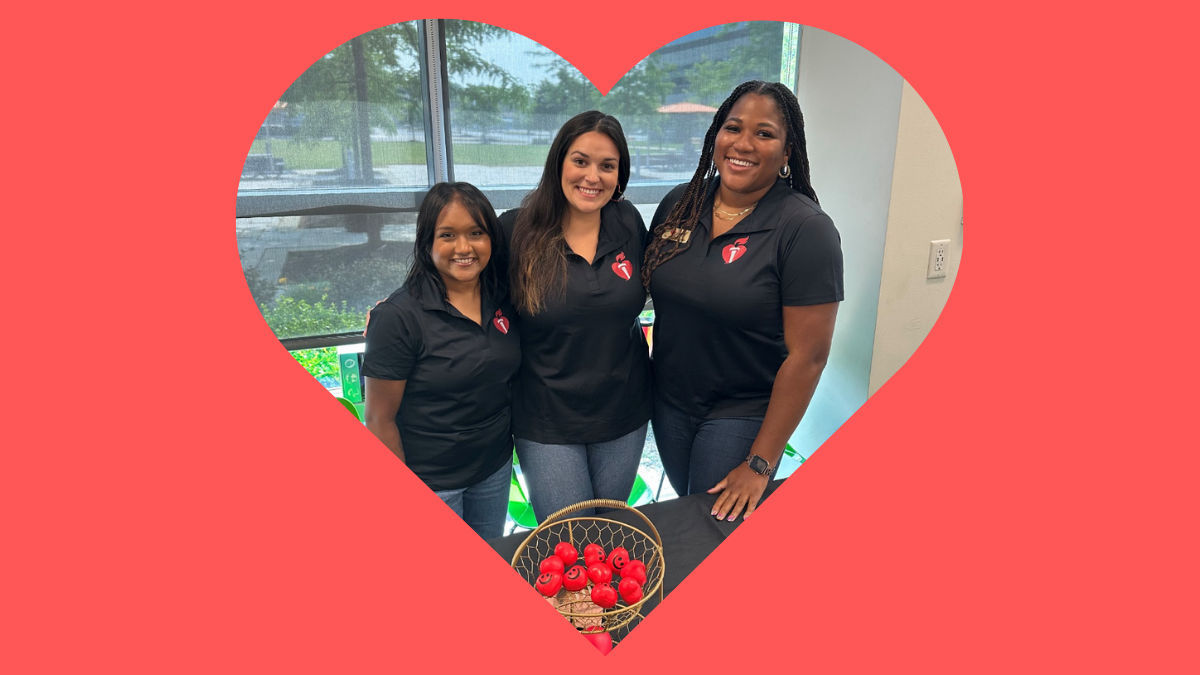
National Heart Month is the perfect time to learn more about our partner, the American Heart Association (AHA) of Greater Cincinnati & Northern Kentucky. This guest post is written by Amanda Changet, community impact director with the AHA.
American Heart Association celebrates 100 years
When the American Heart Association (AHA) was founded on June 10, 1924, heart disease was considered a death sentence. The best option for many people, they were told, was bed rest. There was no treatment, no hope.
But the AHA’s founders didn’t believe that. They felt that if we only understood heart disease, treatments would follow. And were they ever right. Fast-forward to today and there are not only treatments but proven ways to lower your risk for heart disease as well as stroke.
Through scientific research and the power of millions of volunteers and supporters, we have a deeper understanding of the many factors that contribute to these diseases: from traditional medical issues such as high blood pressure to societal problems, structural racism, and discrimination.
Collective impact and sustainable change ahead
According to the latest Community Health Needs Assessment for our region, heart disease is the #1 killer and stroke is #5. To address this, we are aligned with our healthcare and community partners to focus on several critical preventive areas and life-saving skills.
Locally, we are focused on clinical and community-level changes.
Clinical-level changes
System-level changes in clinical settings are sustainable interventions within healthcare settings that improve access and quality of care.
Most of our work is with outpatient care and is particularly focused on HRSA-funded (Health Resources & Services Administration) health centers and organizations reaching disproportionately affected populations. Community health centers and systems in Hamilton County that have prioritized heart health treatments and education by collaborating with us locally include:
- City of Cincinnati Primary Care
- Crossroad Health Center
- Healthcare Access Now
- Mercy Health Perinatal Outreach Team
- St. Vincent de Paul Charitable Pharmacy
- The Christ Hospital – Resistant Hypertension Clinic
- The Healthcare Connection
- WINMED
Community-level changes
Other changes are at the community level, in non-clinical settings, such as schools, workplaces, faith-based communities, nonprofits, and government institutions. Community settings can geographically span from a single institution to a neighborhood, city, or county.
Our focus is on reaching disproportionately affected populations. Community-based organizations that have helped AHA work to achieve change within Hamilton County include:
- bi3
- Center for Closing the Health Gap
- Cincinnati Health Department*
- Community Economic Advancement Initiatives (CEAI)
- Cradle Cincinnati
- Green Umbrella – Greater Cincinnati Regional Food Policy Council*
- Hamilton County Public Health
- Produce Perks*
- The Health Collaborative*
- Wave Pool
- Your Store of the Queen City/Meiser’s Fresh Grocery and Deli
*WeTHRIVE! partners.
Your voice matters
We all have the power to make a difference by speaking out for policies that help build healthier communities and healthier lives. For more than 30 years, You’re the Cure – the American Heart Association/American Stroke Association’s grassroots network – has been doing just that. If you’re passionate about a world that’s free of heart disease and stroke, join this group to advocate for heart-healthy and stroke-smart communities through legislative and regulatory policies in our cities, states, and across the country.
Research as a cornerstone
Through our longstanding support of scientific research, the AHA has propelled breakthroughs that have saved and improved lives. The many AHA-funded discoveries include the first implantable pacemakers, the first artificial heart valve, CPR techniques, and cholesterol-lowering medications.

Locally, our annual Data Blitz event features AHA-funded researchers who present their work in layman’s terms to an audience who may not come from a scientific background. The researchers are challenged to present their work in five minutes or less.
As we hear more from these researchers, we identify gaps in funding and career growth. The need for clinical and translational science is evident and the AHA Community Impact team is working to address these gaps. In 2021, the AHA funded more than $12 million in research awards to the Greater Cincinnati region for 60+ active research projects/studies at Cincinnati Children’s Hospital and Medical Center, Miami University, and the University of Cincinnati.
How can WeTHRIVE! community & school teams work with AHA?
We asked Amanda how WeTHRIVE! communities and schools specifically can interact with AHA.
First and foremost, Amanda says, is AHA’s focus on building awareness around CPR. She emphasizes that anyone can learn CPR and implement it, as long as they feel empowered to do so. When a team is interested, she can come out to provide hands-on training and skills demonstration with manikins.

This is different from taking a complete certification course. “Everyone can learn how to save a life,” Amanda says. “Some jobs require you to have the certification. The certification should not be something that stops people from wanting to learn.”
For teams that want to do something more comprehensive, they may consider working with Amanda to develop a Cardiac Emergency Response Plan, which is a sustainable and equitable plan to respond to a cardiac event in any setting, including workplaces, communities, schools, churches, etc. Amanda can work with your team to identify gaps and needs in your community. The result is a written document that establishes the specific steps to reduce death from cardiac arrest in any setting. “It’s a sustainable plan to save lives for that community,” Amanda says.
Finally, be sure to watch the WeTHRIVE! newsletter for AHA-related information and events. You can also reach Amanda at Amanda.Changet@heart.org.
Photo at top of this page, from left: American Heart Association’s Madiha Hossain, Amanda Changet, and Dr. Angelica Hardee.